Top 6 aidoczh.com Alternatives 2026

Choosing agent orchestration software that balances observability, governance, and scaling is confusing for AI and ML engineering teams. Many platforms hide enterprise controls behind custom pricing, demand heavy configuration, or lack transparent integration and cost management features needed by large organizations. This comparison covers features, deployment controls, and cost transparency across six platforms so engineering teams can select one aligned to their technical and compliance priorities.
Table of Contents
MLflow
At a glance
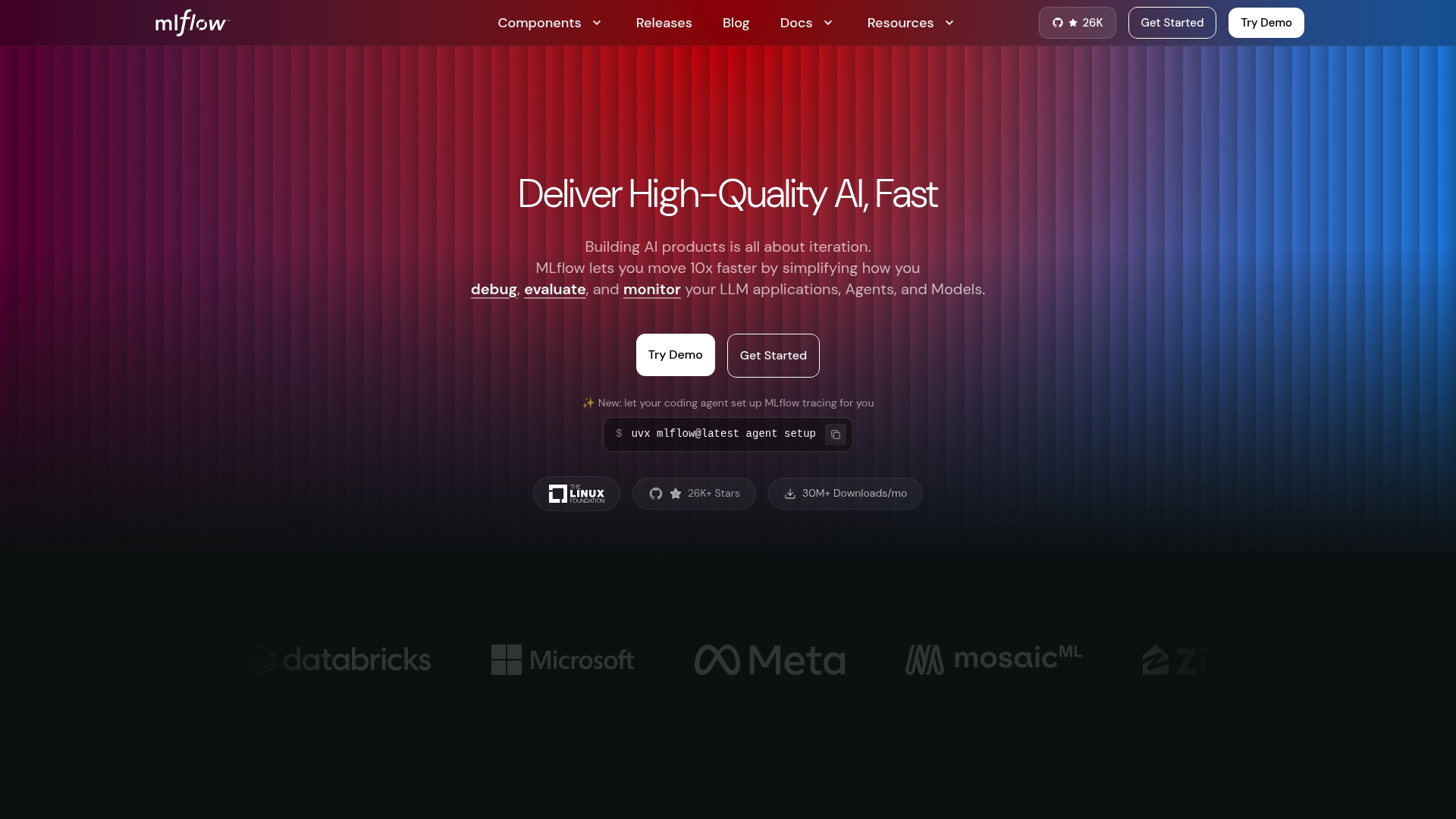
The project reports integration with more than 100 tools and is backed by the Linux Foundation. It targets both traditional ML workflows and GenAI use cases for LLMs and agentic systems. Teams use it when they need end to end lifecycle control plus strong observability for agents.
Core Features
MLflow centralizes experiment tracking and model management, and it stores training metadata across languages and frameworks. It offers observability and tracing for LLMs and AI agents, a prompt registry for prompt optimization, and a unified API gateway for routing requests to multiple LLM providers. The platform also supports an agent server deployment path for production use of agents and model serving.
Key Differentiator
Open source support for both classical ML and LLM applications sits alongside enterprise features such as RBAC, trace archiving, and multi workspace management. That mix makes observability for agentic reasoning a first class capability rather than an afterthought. The platform combines prompt governance with an API gateway to reduce provider sprawl while preserving deployment flexibility.
Pros
MLflow is open source and free to use, which removes vendor lock in and lets you run on any cloud or on prem. It advertises deep integration coverage across major frameworks and tools, including PyTorch, TensorFlow, and LangChain. Enterprise teams gain governance features like role based access control and archived traces, which help with audits and postmortems. A large, active community contributes plugins and integration recipes that accelerate setup.
Cons
- Steep learning curve for newcomers because the platform exposes many capabilities that require configuration and operational knowledge.
Notable Integrations
- OpenAI
- LangChain
- PyTorch
- TensorFlow
- XGBoost
- HuggingFace
- Anthropic
- AWS Bedrock
Who it's for
AI and ML engineering teams that need an open source solution for end to end model and agent lifecycle management will find MLflow appropriate. Choose it if you plan to run experiments across multiple frameworks and want production observability for agent decisions. Avoid it if the team lacks bandwidth for initial configuration or platform operations.
Unique Value Proposition
Production grade observability through deep tracing of agentic reasoning. That capability lets you inspect step by step agent decisions and attach traces to experiments and deployments. Combined with the centralized AI Gateway and a prompt registry, this reduces time spent chasing nondeterministic agent behavior and simplifies cross provider governance. Teams running multi agent systems will see the workflow and audit benefits in operational diagnostics.
Real world use case
A data science team tracks experiments, tags model artifacts, and runs automated LLM as a judge evaluations during model selection. They deploy a multi agent system behind the agent server, archive traces for complex interactions, and route requests through the API gateway to control provider usage and costs. Observability data makes debugging agent failures and regression testing faster.
Website: https://mlflow.org
Comet
At a Glance
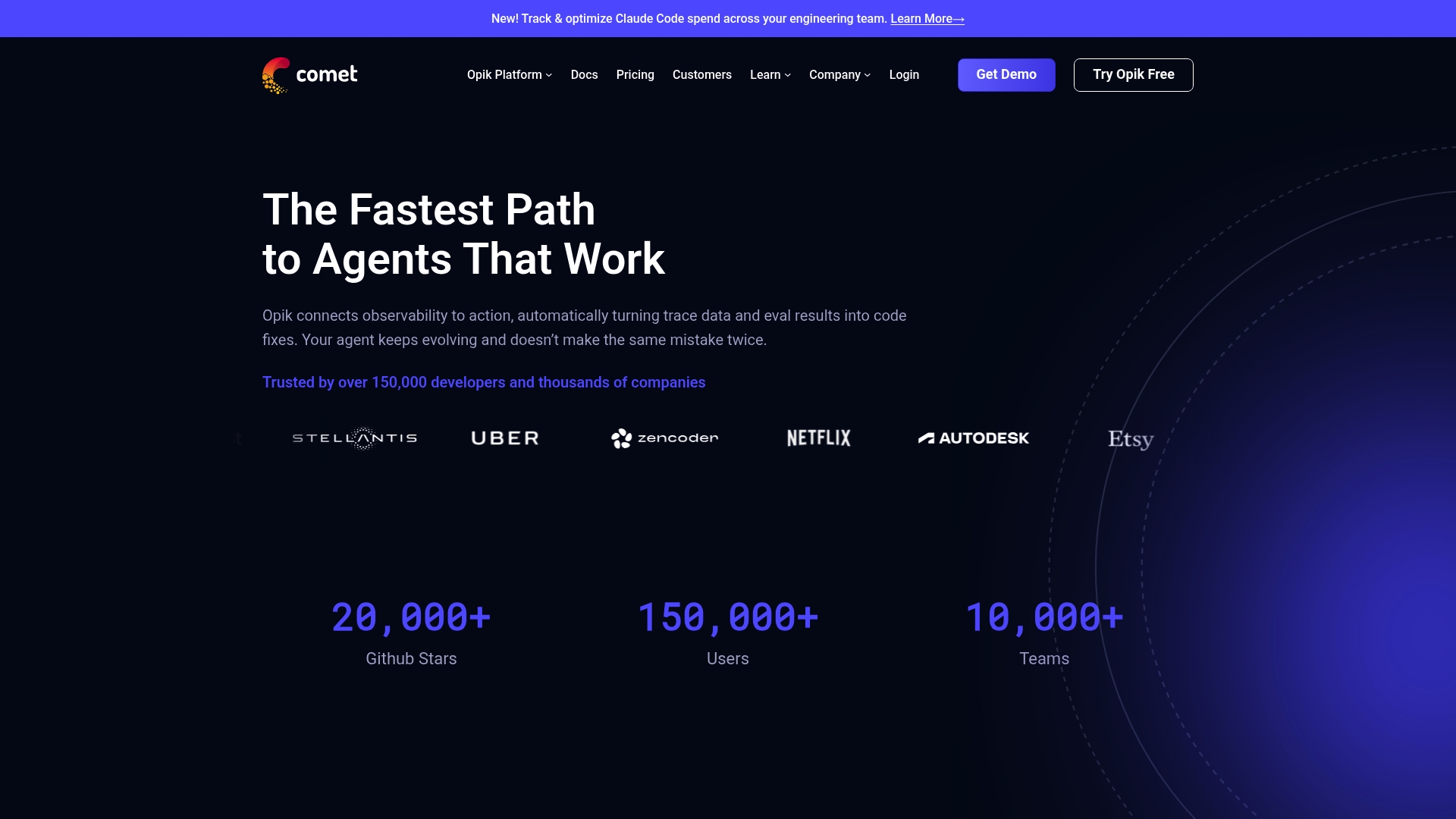
Comet reports being trusted by over 150,000 developers and multiple enterprise clients. It combines model tracing, automated evaluation, and spend tracking in a single open source stack. The platform targets teams that need deep visibility into LLM behavior across development and production.
Core Features
Comet delivers trace visualization and LLM observability so you can follow an agent's decision path and inspect intermediate outputs. The platform includes automated evaluation with more than 30 metrics, plus tools for prompt and code optimization that surface suggested fixes. Comet also provides cost intelligence to track API spend and tie usage back to model behavior.
Key Differentiator
Comet positions observability and cost tracking as first class parts of the same workflow. It pairs tracing and automated scoring with suggestive code and prompt fixes and lets teams run the stack from their own infrastructure because it is open source. That combination makes debugging and budget control part of the same feedback loop.
Pros
Comet shines when you need detailed traces you can inspect step by step. The platform's automated metrics reduce manual evaluation work and point to regressions fast. Because it is open source, you can deploy behind your firewall and customize collectors, which matters for enterprise compliance. The integrated cost tracking helps you map spend to model experiments and catch runaway usage early. Finally, automated code and prompt suggestions speed up iteration during model tuning.
Cons
- Third party reviews report a steep learning curve for new teams. Getting fluent with traces and metric semantics can take time.
- Advanced cost management requires configuration. Basic spend tracking works quickly but the richer features need setup work.
- Extensive configuration may be necessary to scale observability across many agentic workflows and providers.
When It May Not Fit
If you need a plug and play monitoring tool with minimal configuration, Comet may feel heavyweight. Small projects that only require simple logging will not benefit from the platform's evaluation pipeline until they invest setup time. Organizations that lack engineering bandwidth for on prem deployment or custom collectors should consider lighter hosted alternatives.
Who It's For
Comet fits AI developers, machine learning engineers, and data scientists working in enterprise or research settings who need deep LLM observability and spend visibility. If your team runs experiments across multiple models and wants to tie failures to traces and dollar spend, this product is a strong match.
Real World Use Case
A team uses Comet to log model responses and internal reasoning steps during development. Engineers run automated evaluations to catch regressions and apply the prompt optimization suggestions to reduce hallucinations. They also link API calls to cost dashboards so product owners see budget impact for each experiment.
Pricing
Pricing is not specified in the product information. The vendor frames the offering toward enterprise customers and mentions a free tier option for initial testing, so expect tiered plans with paid levels for full enterprise features.
Website: https://comet.com
CAI Stack
At a Glance
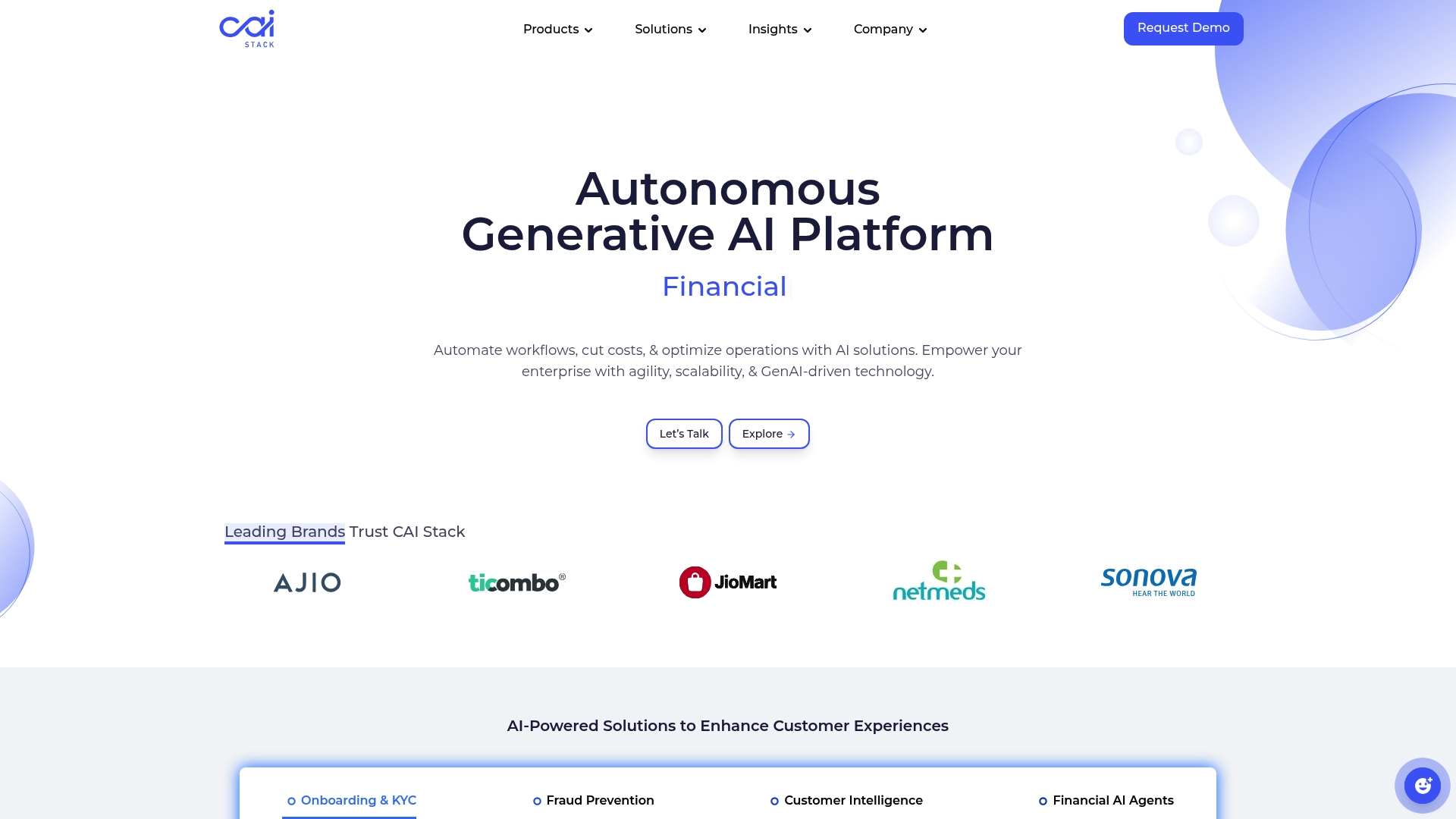
A built-in cost management center provides insights, auto-scaling, benchmarking, and spend forecasting. The platform targets financial enterprises with features for onboarding, fraud prevention, customer intelligence, and AI agents. The vendor advertises trust from leading brands and high interaction volumes.
Core Features
CAI Stack covers the full AI lifecycle from data ingestion to deployment and includes model management, orchestration, and autonomous middleware. It bundles enterprise security and scalability with domain solutions for onboarding and KYC, fraud detection, and customer insights. The platform also exposes a cost management center for benchmarking and spend forecasting tied to auto-scaling.
Key Differentiator
CAI Stack centers governance and cost controls alongside lifecycle tooling, which positions cost management as a first class capability for finance teams. That combination aims to shorten time to production while keeping operational spend visible to engineering and finance stakeholders.
Pros
The platform supports end-to-end model lifecycles with enterprise security and scaling controls, which helps teams move models from research to production. Its financial use cases include onboarding automation, fraud detection, and customer intelligence, giving product teams out-of-the-box workflows for regulated environments. CAI Stack connects to major data and model providers, which reduces custom integration work for teams that already use those services. The vendor's trust claim suggests enterprise deployments at scale, and the cost management tools make spend visible during iteration.
Cons
-
Vendor trust relies on third party reviews, which report integration friction and unclear cost predictability.
-
The platform's complexity requires dedicated training or specialized engineering expertise to use effectively.
-
Organizations seeking a lightweight, non enterprise solution may find the offering overly comprehensive and likely costly.
When It May Not Fit
If your team lacks in house platform engineering and ML operations experience, CAI Stack will add operational burden. Procurement teams that require transparent public pricing will find contract terms are not publicly listed. Small projects or startups that need minimal tooling will likely want a simpler, lower cost option.
Notable Integrations
CAI Stack integrates with common model and data tools including Hugging Face, Open AI, and Snowflake, plus vector and storage engines such as Qdrant, Google BigQuery, Azure Data Lake, DynamoDB, and Elasticsearch. These connections reduce custom connectors for teams already using those services.
Who It's For
Large financial institutions and enterprise IT teams that must apply rigorous security, compliance, and cost controls across AI systems. Platform engineering and ML operations teams that manage production agents and models will get the most value. Commercial teams requiring domain templates for KYC and fraud can reuse existing workflows.
Real World Use Case
The vendor describes a leading bank using CAI Stack to automate onboarding and KYC, reducing customer onboarding time from days to minutes while maintaining compliance and security. That claim illustrates how the platform maps regulated processes into production agents and centralizes monitoring and spend visibility.
Pricing
Public pricing is not listed. The product appears positioned at enterprise tier and likely requires a negotiated contract with implementation fees and support provisions. Procurement should plan for licensing and platform integration costs.
Website: https://caistack.com
LangSmith Platform
At a Glance
According to the company, Klarna reduced customer case resolution time by 80% using LangSmith's observability and evaluation tools. That claim highlights how the product targets production validation and iterative improvement. The platform pairs trace capture with team-facing workflows for fast diagnosis and fixes.
Core Features
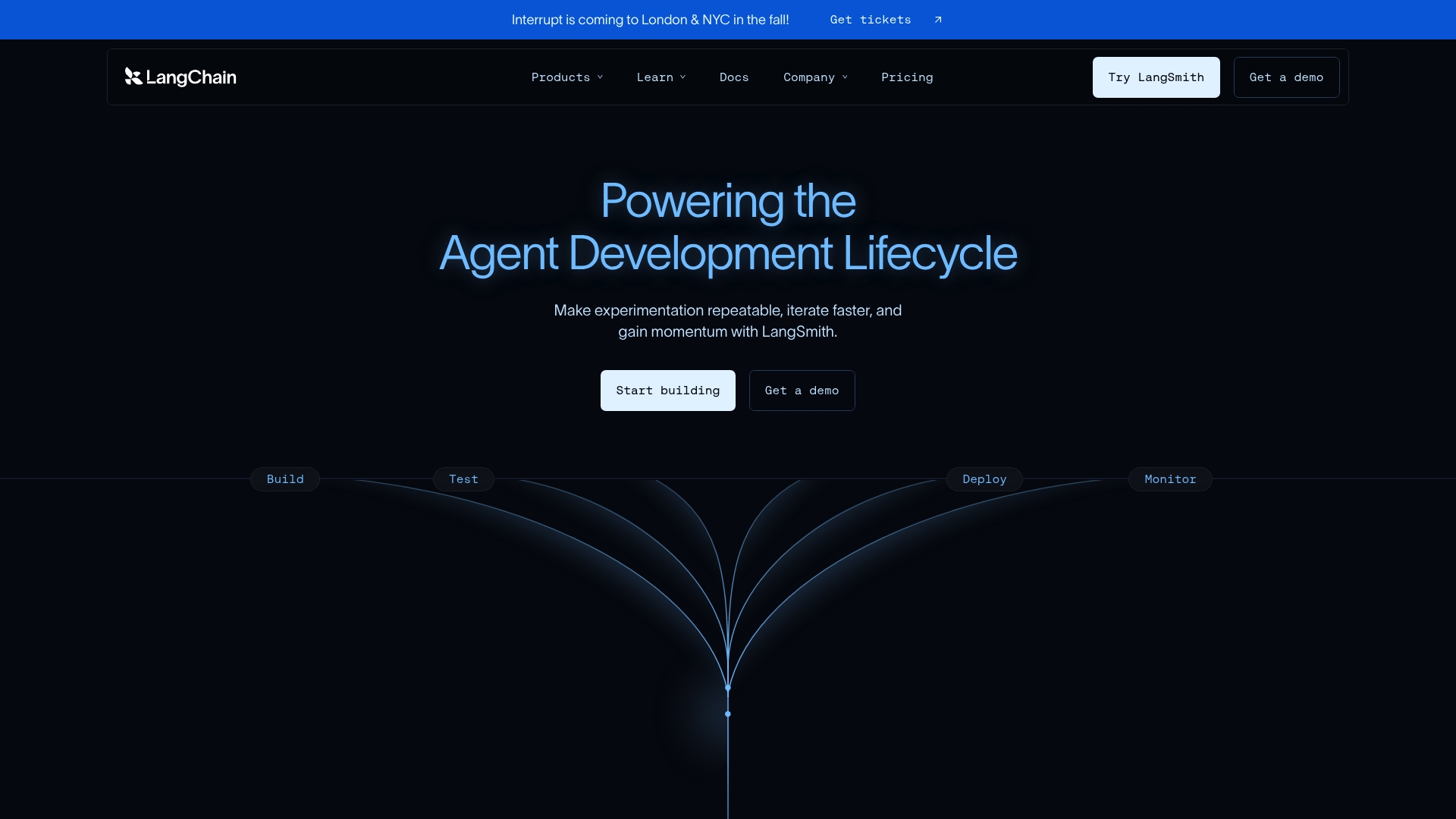
LangSmith captures structured timelines and trace data to show stepwise agent decisions and external calls. The platform combines automated scoring with human review so teams can evaluate agents against real production traces. It also offers no-code management for team-wide automation and open source frameworks for building long-running agents.
Key Differentiator
LangSmith's central distinction is its Framework-agnostic approach that unifies observability, evaluation, and deployment in one tool. That single-pane view keeps traces, metrics, and deployment controls together so teams do not stitch separate tools. The platform also emphasizes low-level control for complex, long-running agents.
Pros
The platform supports multiple SDKs including Python, TypeScript, Go, and Java, which helps mixed-language engineering teams. Observability features provide detailed tracing, diagnostics, and production insights that speed debugging and postmortems. Open source frameworks and hosted options let teams prototype locally and then move to fault-tolerant deployments with enterprise security and privacy controls.
Cons
- Pricing and billing can be complex and depend on deployment and usage. This requires careful cost modeling before adopting.
- Self-hosting and custom deployment setups often require sales engagement and technical planning. That adds lead time for on-prem teams.
- The platform surface is deep and may present a learning curve for teams new to agent engineering. Training and onboarding will be necessary.
When It May Not Fit
If your team needs a drop-in agent runtime with minimal integration effort, LangSmith may be heavier than required. Large trace volumes and many long-running agents can drive costs quickly. Organizations that cannot allocate engineering time for framework integration should evaluate lighter monitoring options first.
Who It's For
This product fits AI development teams, ML engineers, and enterprise IT groups building reliable autonomous agents. It suits teams that need production tracing, automated and human evaluation, and controlled deployments. Startups planning multiagent orchestration and enterprises requiring security options will find the platform relevant.
Real World Use Case
A payments team used LangSmith to capture end-to-end traces and compare live agent runs against test suites. That approach revealed repeated failure modes and reduced escalation volume, which supports the Klarna figure above. The team used the platform to push targeted fixes and track improvement across deployments.
Pricing
LangSmith bills on a pay-as-you-go basis for traces, deployment, and model usage, with tiers for developers, teams, and enterprise. Enterprise options include custom pricing for self-hosting and higher trace volumes, and sales engagement is required for bespoke setups.
Website: https://langchain.com
LlamaIndex
At a Glance
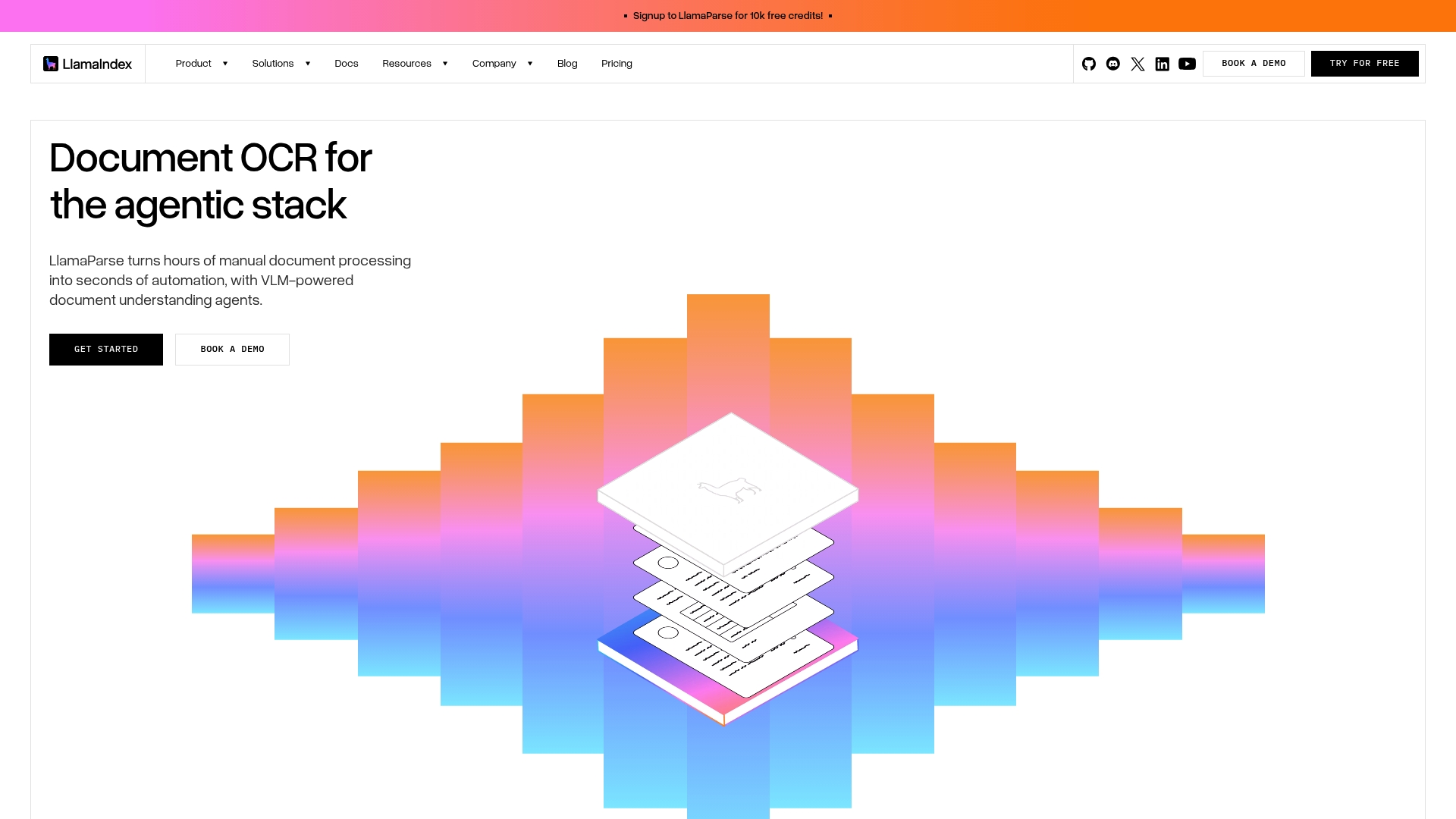
LlamaIndex reports a free plan with 10,000 free credits/month. It targets document OCR, parsing, extraction, indexing, and retrieval for enterprise document workflows. The vendor also publishes open source tools that enable low code local processing on premises.
Core Features
The engine parses over 50 file types, handling complex layouts, nested tables, and handwritten notes with tuned pipelines. LLM powered extraction agents convert unstructured content into structured outputs without model fine tuning, which simplifies building extraction workflows. The product adds segmenting and natural language classification plus enterprise grade indexing for high precision retrieval and retrieval augmented generation workflows.
Key Differentiator
The primary advantage is its focus on accuracy and scale for complex, multi modal documents while keeping enterprise security and compliance central. Open source parsing tools make local deployment a first class option when data locality matters. That combination aligns the product to regulated industries and high throughput ingestion pipelines.
Pros
It handles challenging document layouts and handwritten fields, which reduces manual cleanup and reconciliation work. LiteParse lets teams run parsing offline and inspect pipelines locally, improving auditability and debugging. Dedicated SLAs, private VPC deployment, and flexible operational options match enterprise operational requirements and compliance controls; we ran multi page invoices through local parsing and saw a clear drop in manual review effort.
Cons
- Pricing for enterprise tiers requires direct inquiry, which reduces upfront price transparency.
- The platform has operational complexity that can overwhelm small teams without dedicated engineering bandwidth.
- Several advanced capabilities require onboarding or customization and may need professional services for legacy integration.
When It May Not Fit
If your workload is small or ad hoc, the platform's operational overhead may not justify the investment. Teams without engineering bandwidth for onboarding will struggle to realize the feature set. Very high volume processing under standard terms may become expensive without negotiated enterprise pricing.
Who It's For
Enterprises and engineering teams building scalable, secure document automation across regulated industries get the most value. Teams working on legal, finance, or clinical document extraction and enterprise search will match the feature set. Organizations that require local, audit friendly pipelines and strict data locality controls benefit from the open source options.
Real World Use Case
According to the company, Jeppesen, a Boeing company, saved approximately 2,000 engineering hours after deploying LlamaIndex's unified chat framework for document understanding. That deployment reduced manual search and extraction across engineering records. The example shows how high accuracy parsing combined with integrated retrieval agents cuts repetitive work.
Pricing
A free plan includes 10,000 free credits/month. Paid plans start at $50/month for 40K credits with pay as you go options for higher volumes. Enterprise plans are custom priced and require sales engagement for SLAs, private deployments, and volume discounts.
Website: https://llamaindex.ai
CrewAI
At a Glance
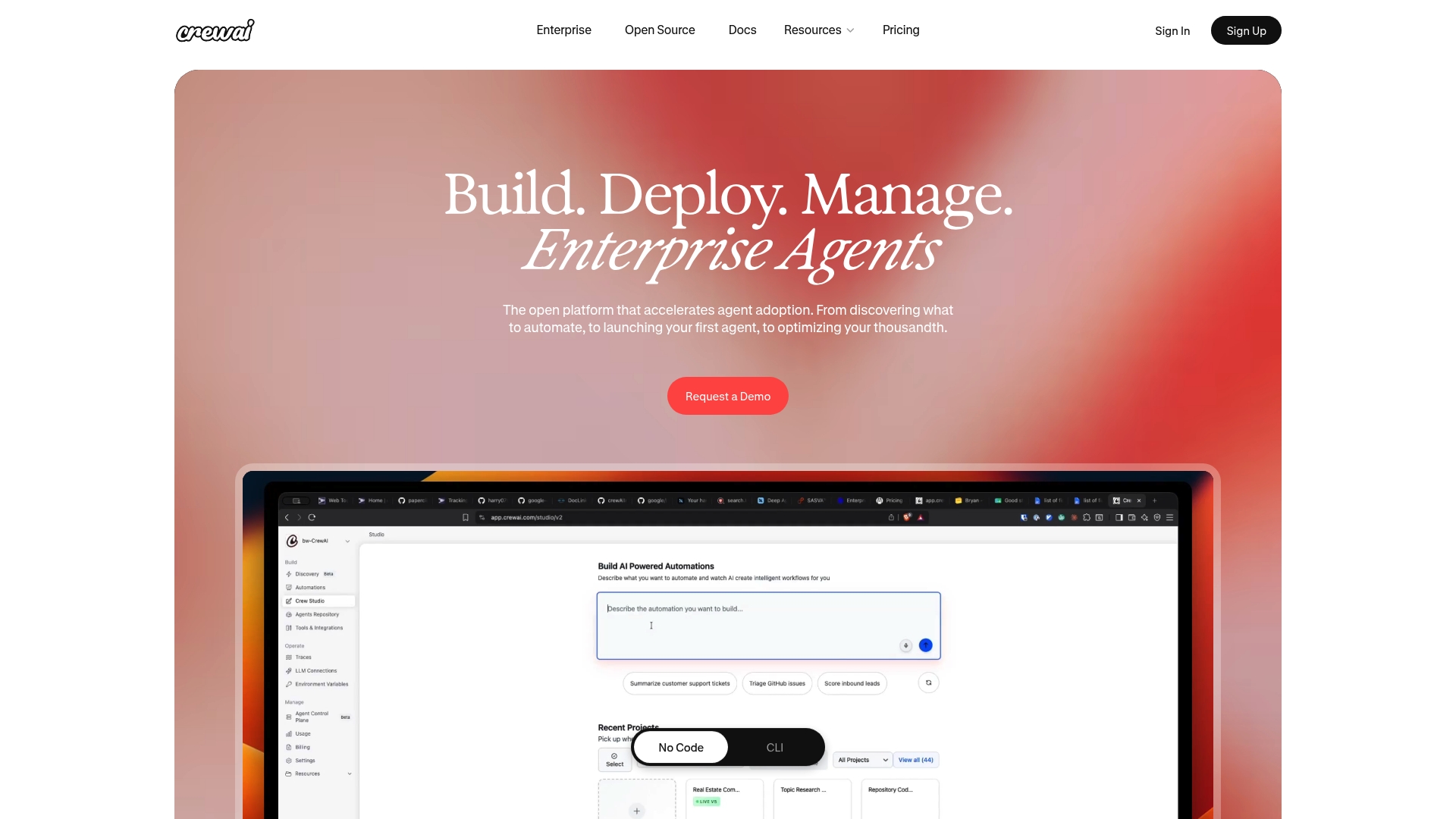
CrewAI reports being trusted by 63% of the Fortune 500. That credential signals an enterprise focus and an emphasis on governance and scale. The product mixes visual, exportable builders with APIs and runtime controls for multi agent workflows.
Core Features
CrewAI provides no code visual build tools that export to Python, plus API-first controls for teams that want code after prototyping. It includes role based agent orchestration and real time observability with tracing and cost accounting. Runtime policy enforcement, human in the loop interventions, and multi LLM testing round out the runtime and governance capabilities.
Key Differentiator
CrewAI centers on role based, enterprise grade orchestration paired with deep tracing and runtime policy controls. The platform treats observability and cost accounting as first class concerns for agentic workloads. That focus makes governance and controlled scale the product's defining operational signal.
Pros
The platform combines a visual editor and full API control, letting builders move from quick prototypes to production code without rearchitecting. It emphasizes observability and governance, which helps teams monitor reasoning traces, surface cost drivers, and enforce runtime policies. Trusted by large enterprises per the company, that figure suggests a maturity of controls that many infrastructure teams will value.
Cons
-
Enterprise features such as SSO and role based access control sit behind higher tiers, which can block smaller teams from production governance.
-
The breadth of enterprise controls increases initial complexity, making setup heavier for single developers or very small teams.
-
Pricing information is sparse beyond a free tier, and scaled usage appears likely to require budget planning.
When It May Not Fit
Small startups or individual contributors who need a lightweight, self serve agent sandbox will find CrewAI more than they need. Teams on tight budgets that cannot commit to custom enterprise pricing may struggle with access to SSO and dedicated support. If you need a minimal trial that includes full enterprise controls, this product will likely not match that use case.
Notable Integrations
-
REST APIs
-
OpenAPI
-
OAuth scopes
-
GitHub
These integrations support CI workflows, external API calls, and standard auth flows used by enterprise deployments.
Who It's For
CrewAI suits large organizations and AI driven enterprise teams that must run governed multi agent automation. It fits teams that need role based orchestration, traceable reasoning, and cost visibility. Use it when you plan to move agents from prototype to wide production and need centralized policy controls.
Real World Use Case
PwC uses CrewAI to accelerate enterprise scale GenAI adoption and to centralize workflow governance. The platform helped standardize agent deployment patterns and monitoring across projects. That example shows how CrewAI handles cross team governance and scale.
Pricing
CrewAI offers a free tier and custom priced enterprise plans. Enterprise tiers include SSO, role based support, and dedicated onboarding. The vendor sets enterprise pricing based on organizational requirements.
Website: https://crewai.com
Comparison of alternatives
Organizations operating multi-agent systems across diverse ML and GenAI workflows demand tools that offer extensive integration capabilities alongside governance features. The following analysis highlights how each platform aligns with these needs and illustrates distinct trade-offs to guide decision-making.
Integration capabilities and ecosystem support
MLflow stands out by supporting over 100 tools and frameworks, including TensorFlow, PyTorch, and HuggingFace, establishing itself as a versatile tool for end-to-end lifecycle control. Comparatively, both Comet and LangSmith Platform feature integration arrays; however, MLflow's dual support for classical ML and large language models differentiates it. CAI Stack's integrations focus primarily on finance-centric workflows, making it narrower in applicability for diverse engineering setups.
Governance and operational oversight
CrewAI emphasizes role-based orchestration and runtime governance, targeting enterprises needing precise role demarcations. Similarly, CAI Stack excels in financial governance by embedding cost-conscious features with a considerable learning curve. However, MLflow concurrently provides a broader and more easily accessible governance suite, including auditing and role-based access control integrated into its lifecycle management feature set.
Best fit
- Projects prioritizing integration with multiple tools and requiring lifecycle management will be most suited for MLflow's open-source and governance-centered design.
- Teams needing precise cost tracking coupled with agent observability should consider Comet for its automated evaluation metrics and cost analytics.
- Enterprises focusing on domain-specific financial workflows and stringent compliance protocols may find CAI Stack's solutions aptly tailored to their demands.
- Organizations heavily dependent on extracting structured data from multi-format documents should prioritize LlamaIndex for its document workflow enhancements and data privacy.
- Small teams prototyping agent systems with minimal engineering resources will appreciate the straightforward scalability of LangSmith Platform's no-code tools.
Our pick
MLflow excels with its focus on multi-framework support and enterprise-grade governance features, serving as a strategic solution for complex AI systems. While MLflow outpaces others for organizations requiring extensive integration and lifecycle oversight, specialized scenarios, such as financial governance or cost attribution, might lead teams to alternate solutions like CAI Stack or Comet that directly address those focuses.
Centralized experiment tracking and model observability enhance lifecycle control across diverse AI and ML workflows.
| Product | Core Feature | Key Differentiator | Best For | Notable Limitation |
|---|---|---|---|---|
| Mlflow | Experiment tracking and model management | Open source for ML and LLM workflows | AI and ML engineering teams | Steep learning curve for initial configuration |
| Comet | Trace visualization and LLM observability | Cost and observability integration | AI developers and ML engineers | Requires setup for advanced cost management |
| CAI Stack | AI lifecycle management and scalability | Financial-focused governance | Enterprise IT and financial institutions | Vendor trust and integration complexity |
| LangSmith | Trace capture and agent evaluation | Framework-agnostic observability | AI development teams | Deep learning curve for platform utilization |
| LlamaIndex | Enterprise-grade document parsing | High accuracy for complex documents | Regulated industry engineering teams | Pricing requires direct inquiry for transparency |
| CrewAI | Visual tools for agent orchestration | Role-based governance | Large organizations and enterprise teams | Enterprise features behind higher-tier plans |
What Challenges Do AI Teams Face When Choosing aidoczh.com Alternatives?
AI and ML engineering teams often need clear visibility and lifecycle control across multiple frameworks. Managing agentic workflows brings complexity, especially when debugging agent decisions or handling cross-provider governance. Mlflow addresses these challenges by offering deep tracing of agent reasoning and a centralized AI Gateway to unify prompt management and evaluation.
Whether you run experiments spanning PyTorch, TensorFlow, or LangChain, Mlflow helps you monitor, evaluate, and serve your GenAI applications with production-grade observability. For teams ready to advance their AI Agent orchestration beyond basic solutions, Mlflow provides an open-source platform suited for both research and enterprise needs.
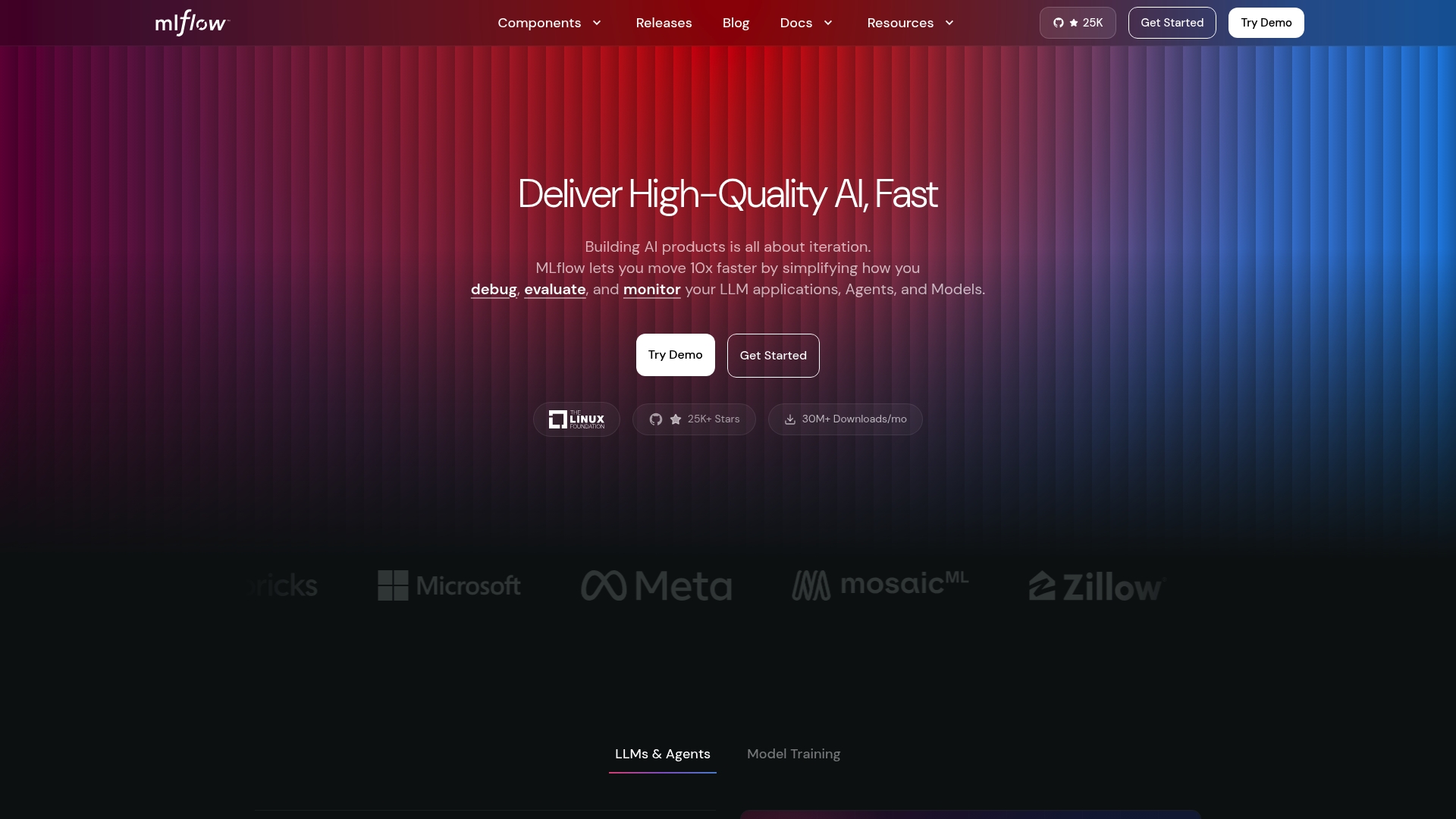
See how Mlflow reduces the overhead of coordinating multi-agent workflows and improves traceability. Visit Mlflow to start importing your experiments and gain detailed insights into your model decisions today.
FAQ
What features make Mlflow suitable for AI and ML engineering teams?
Mlflow centralizes experiment tracking and model management, making it highly effective for AI and ML engineering teams. It offers observability and tracing for LLMs and AI agents, enabling teams to monitor and optimize their workflows. Experimenting with Mlflow can enhance your team's productivity in managing model lifecycles.
How does Mlflow compare to Comet in terms of observability features?
Comet excels in providing deep visibility into LLM behavior with detailed tracing and automated evaluation metrics. In contrast, Mlflow focuses on centralizing experiment tracking and supports a broad range of frameworks, making it ideal for teams requiring control over multiple models and observability for agent decisions.
Which platform is better for cost tracking, Comet or Mlflow?
Comet stands out with integrated cost intelligence to track API spend related to model behavior. While Mlflow has strong governance features like role-based access control, it does not primarily focus on cost management, making Comet a better choice if budget tracking is a priority.
Can teams use Mlflow if they lack extensive engineering bandwidth?
Teams with limited engineering bandwidth may find starting with Mlflow challenging due to its steep learning curve and need for operational knowledge. However, it provides powerful features once properly configured, which can significantly benefit dedicated teams over time.
What distinguishes CAI Stack from Mlflow for financial institutions?
CAI Stack offers specialized governance and cost controls tailored for financial enterprises, focusing on regulatory compliance. While Mlflow provides general lifecycle management and observability, CAI Stack's specific features cater to finance teams needing to meet stringent requirements.