Team Collaboration Tools for AI Development in 2026

Team collaboration tools for AI development are platforms and workflows that coordinate human engineers, AI coding agents, and model governance systems across the full project lifecycle. The best tools in this category go well beyond shared chat or kanban boards. They enforce structured task lifecycles, maintain immutable model artifacts, and produce audit trails that survive production incidents. Mlflow, Forge, and Optio represent the current standard for teams that need reproducibility alongside speed. This article breaks down the tools that actually move the needle, why artifact-first workflows outperform ad-hoc coordination, and how to pick the right stack for your team's scale and complexity.
1. Top team collaboration tools for AI development with multi-agent support
Multi-agent coordination is the defining challenge of modern AI development workflows. When several AI coding agents work in parallel on the same codebase, shared checkouts produce diff collisions, overwritten context, and broken CI pipelines. The solution is task isolation at the filesystem level.
Forge addresses this directly. It provisions isolated git worktrees per task, so each agent operates in its own directory without touching another agent's in-progress changes. Every task moves through explicit lifecycle states: Intake, Research, Planning, Coding, and Verification. Human review gates sit between Coding and Verification, which means no agent output reaches the main branch without a recorded approval. This is not a minor convenience. It is the structural difference between a reproducible collaborative AI development workflow and a debugging nightmare.

Optio takes a complementary approach, focusing on task lifecycle management and audit log generation. Where Forge handles the git layer, Optio tracks decisions, assigns ownership, and surfaces blockers across the team. Together, they cover the two failure modes that kill AI projects: code conflicts and invisible decision history.
Standardized multi-agent workflows like Agent Collaboration SOP formalize this further by requiring 100% of tasks to pass through named phases linked in a graph database. This means every handoff between a human engineer and an AI sub-agent is traceable. Teams using this pattern report fewer regressions at the Verification stage because the graph makes dependencies explicit before code is written.
- Forge: Best for teams running 3 or more parallel AI coding agents. Provides worktree isolation, lifecycle states, and CI gate enforcement.
- Optio: Best for project leads who need cross-agent task visibility and decision logging without managing git infrastructure directly.
- Agent Collaboration SOP: Best for teams standardizing a new multi-agent process from scratch, especially when onboarding junior engineers alongside AI agents.
Pro Tip: Configure your CI gate to block merges unless the Verification phase log contains a named human approver. Anonymous approvals defeat the audit trail entirely.
2. How AI project management and model versioning tools improve auditability
Model versioning is the backbone of a trustworthy collaborative AI model versioning workflow. Without it, production incidents become forensic exercises with no clear answer to "which model is running and why."
The core best practice is bundling. Separating preprocessing logic from model weights in serving repositories complicates rollbacks because the two components can drift out of sync. The correct approach bundles weights, preprocessing code, schema definitions, and decision thresholds into a single signed artifact. When you need to roll back, you re-point a config to the previous bundle. No file copying, no service restarts, and sub-10-second rollbacks become achievable via registry-based stage pointers.
Mlflow's Model Registry implements this pattern natively. Each registered model version carries a full lineage record: the run ID that produced it, the Git commit, the dataset hash, and the parameters used. Promotion between DEV, STAGING, and PROD is a first-class operation with a recorded approver at each stage. Pinning model versions to immutable references like Git SHAs reduces incident root cause analysis difficulty by up to 70%. That figure reflects the difference between "we know exactly what changed" and "we think it was probably the preprocessing update."
| Tool | Versioning approach | Rollback speed | Audit trail |
|---|---|---|---|
| Mlflow Model Registry | Immutable run-linked artifacts | Sub-10 seconds via stage pointer | Full lineage with approver records |
| ModelRegistry Pro | Stage FSM with mandatory approval | Config re-point | DEV/STAGING/PROD promotion logs |
| Manual Git tags | Commit SHA references | Varies by team process | Commit history only |
ModelRegistry Pro enforces audit trails for promotions between DEV, STAGING, and PROD with recorded approvers and lineage metadata. It is a lighter-weight option for teams not yet on Mlflow, though it lacks the experiment tracking and evaluation integrations that Mlflow provides out of the box.
Pro Tip: Never use a "latest` alias in production. Tag every deployed artifact with its S3 URI and Git SHA at promotion time. This single habit eliminates the most common class of "what broke and when" questions.
3. Which collaboration software enhances communication and knowledge sharing in AI teams
Communication tools are where most AI teams underinvest. The assumption is that Slack plus a shared Google Drive is sufficient. For teams running complex multi-agent pipelines, it is not.
Missive excels at multi-channel messaging and is particularly useful for AI teams that communicate across email, SMS, and chat within the same thread. This matters when external stakeholders, data vendors, or compliance reviewers are part of the conversation but not on your internal Slack workspace. FigJam suits design-heavy AI teams working on user-facing model outputs, offering a shared canvas for annotating model behavior examples and mapping agent decision trees visually. Airtable supports database-style project collaboration, which works well for tracking dataset versions, labeling queues, and experiment metadata in a format that non-engineers can read.
Confluence remains the standard for structured documentation in AI teams. A well-maintained Confluence space with pages for each model's design decisions, evaluation criteria, and deployment history prevents the information silos that slow down onboarding and incident response. The key discipline is capturing decisions in durable formats, not transient chats. Artifact-first approaches improve legibility and handoff by recording every design decision, plan, and evaluation as Markdown logs or graph nodes. A Slack message explaining why you chose a particular embedding model is invisible to the engineer who joins six months later. A Confluence page is not.
- Slack: Best for real-time team communication. Use structured channels per project and per agent type to avoid noise.
- Missive: Best for teams with external stakeholders requiring multi-channel thread management.
- FigJam: Best for visual mapping of agent workflows, decision trees, and model behavior annotation.
- Confluence: Best for durable documentation of model design decisions, evaluation results, and deployment runbooks.
- Airtable: Best for non-engineering stakeholders who need visibility into dataset and experiment tracking without accessing your ML platform directly.
4. How to choose the best AI development workflow tools for your team
Selecting AI project management tools is a decision with real downstream consequences. The wrong choice creates integration debt that compounds as your agent count grows. Use this framework to evaluate candidates against your actual constraints.
1. Assess multi-agent support first. If your team runs more than two AI coding agents in parallel, worktree isolation is non-negotiable. Tools that lack this will produce merge conflicts that cost more time than the agents save. Multi-agent coordination tools like OpenRig provide 15 to 40 or more human-AI commands and support complex team collaboration dashboards. Verify that any tool you evaluate can manage your current agent count with room to grow.
2. Verify versioning depth. A tool that versions model files but not preprocessing code or schema definitions is incomplete. Require immutable artifact bundles as a baseline. Check whether the tool records the approver identity at each stage promotion, not just the timestamp.
3. Evaluate audit trail completeness. Production compliance and incident response both depend on knowing who approved what and when. Tools that log only code changes miss the decision layer entirely. The audit trail should cover task assignments, review approvals, model promotions, and rollback events.
4. Check communication integration. Your versioning and task management tools should push notifications to Slack or your messaging platform of choice. Manual status updates create lag and errors. Native webhooks or API integrations are the minimum bar.
5. Match tool complexity to team size. A two-person AI team does not need a graph-database-backed task lifecycle system. Start with Mlflow for model versioning and a structured Slack channel convention. Add Forge or Optio when your parallel agent count exceeds three. Add OpenRig-style topology management when you are coordinating dozens of agents across multiple projects.
6. Budget for open-source first. Mlflow, Forge, and Agent Collaboration SOP are all open-source. For most teams, the open-source stack covers 80% of requirements. Paid tools like Missive or Airtable add value at the communication and stakeholder visibility layer, not the core engineering layer.
7. Plan for remote collaboration from day one. Distributed AI teams need tools with strong async support. Synchronous-only tools create bottlenecks when engineers span multiple time zones. Prioritize tools with comment threads, async review workflows, and notification controls.
Key takeaways
The most effective collaboration stack for AI development combines isolated multi-agent task workflows, immutable model artifact versioning, and durable documentation practices that outlast any individual team member.
| Point | Details |
|---|---|
| Isolate agent tasks with worktrees | Forge-style git worktree isolation prevents diff collisions when multiple AI agents work in parallel. |
| Bundle model artifacts completely | Weights, preprocessing, schema, and thresholds must ship as one signed artifact to enable reliable rollbacks. |
| Enforce stage promotion audits | Every DEV-to-PROD promotion needs a named approver recorded in the registry, not just a timestamp. |
| Capture decisions in durable formats | Markdown logs and Confluence pages outlast Slack threads and protect institutional knowledge. |
| Match tool complexity to team scale | Start with Mlflow and structured channels; add Forge and topology management as agent count grows. |
Why most AI teams are still collaborating wrong
The biggest mistake I see AI teams make is treating collaboration as a speed problem. They add more agents, more channels, more standups, and then wonder why incidents take longer to diagnose. The real problem is almost always structural. Decisions live in ephemeral chat histories. Model versions are tagged with latest. Preprocessing code lives in a separate repo from the weights it serves.
I have watched teams spend three days tracing a production regression that a proper audit trail would have resolved in 20 minutes. The model had been promoted without a recorded approver, the preprocessing script had been updated independently, and nobody had bundled them together. Every piece of that failure was preventable with tools that already exist.
What I find genuinely encouraging about the 2026 tooling landscape is that artifact-first workflows are becoming the default, not the exception. Mlflow's Model Registry, Forge's worktree isolation, and structured SOPs like Agent Collaboration SOP are all moving in the same direction: make the right workflow the path of least resistance. The teams that invest in these structures now will have a significant advantage when their agent counts double, because their governance infrastructure will scale with them rather than collapse under the weight.
The future I expect to see is tighter integration between human review gates and AI-generated audit summaries. Instead of a human reading through a diff to approve a model promotion, the AI agent will surface a structured summary of what changed, what the evaluation metrics show, and what the rollback path is. The human still approves. But the cognitive load drops dramatically. That is the direction worth building toward.
— Kevin
How Mlflow supports governance and collaboration for AI teams
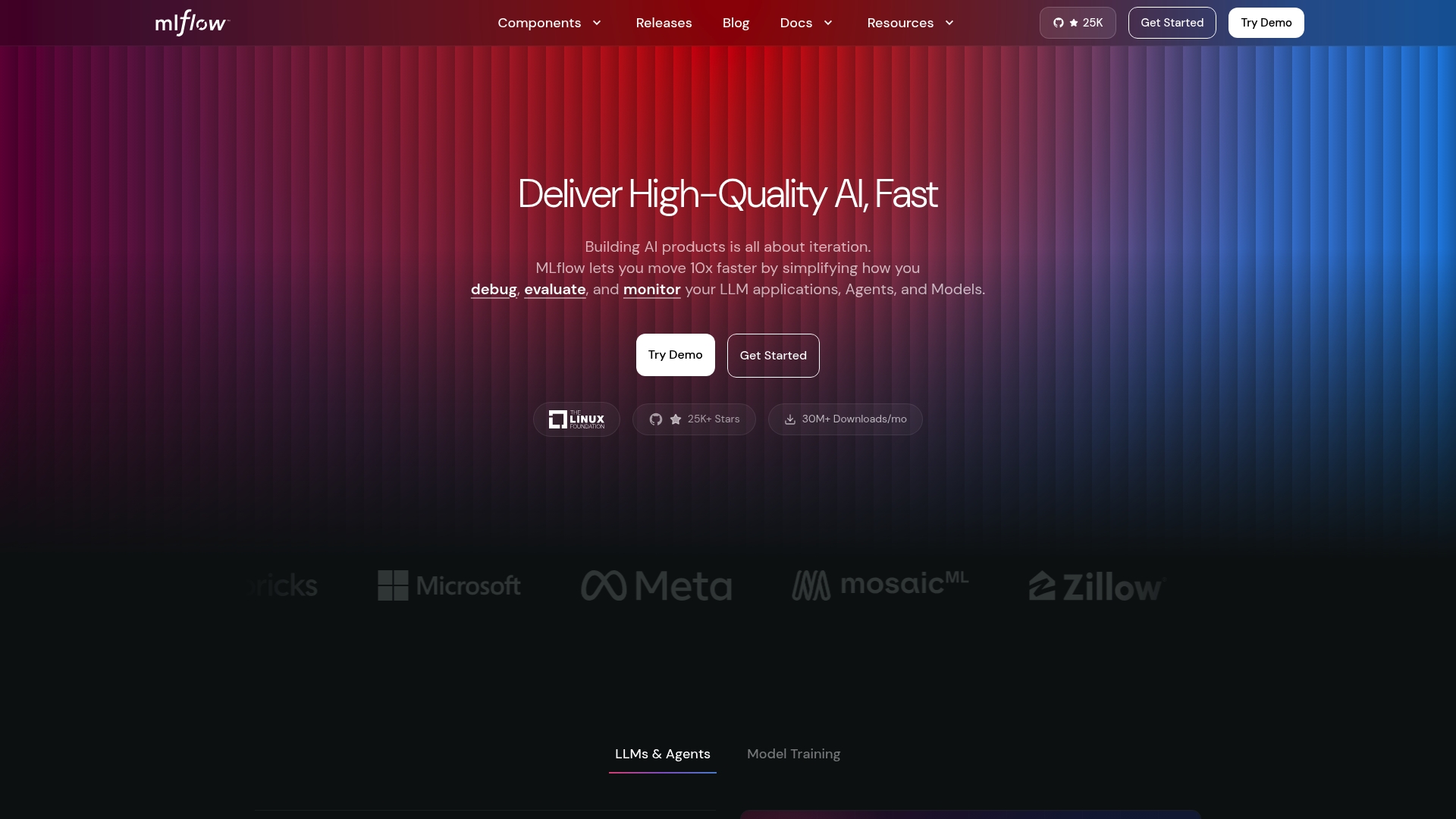
Mlflow is built for exactly the workflows this article describes. Its Model Registry enforces immutable artifact versioning with full lineage tracking, stage promotion audits, and sub-10-second rollback via config re-pointing. For teams running multi-agent pipelines, Mlflow's tracing for multi-agent systems captures agentic reasoning at every step, giving your team the observability layer that makes production incidents diagnosable rather than mysterious. The Mlflow GenAI platform connects model governance, LLM-as-a-Judge evaluation, and agent orchestration in one open-source platform. If your team is ready to move from ad-hoc collaboration to a production-grade workflow, Mlflow is the place to start.
FAQ
What are the best tools for AI teamwork in 2026?
Mlflow, Forge, and Optio cover the core requirements: model versioning, multi-agent task isolation, and audit trails. Communication tools like Slack and Confluence handle documentation and async coordination.
How does git worktree isolation help AI development teams?
Isolated git worktrees give each AI coding agent its own working directory, preventing diff collisions and enabling parallel work with controlled merges through CI gates. Forge implements this pattern natively.
Why is model versioning critical for collaborative AI workflows?
Pinning model versions to immutable references reduces root cause analysis difficulty by up to 70% during production incidents. Without versioning, teams cannot reliably identify which model artifact caused a regression.
What is an artifact-first collaboration workflow?
An artifact-first workflow captures every design decision, evaluation result, and model promotion as a durable record, such as a Markdown log or registry entry, rather than relying on transient chat messages. This approach directly improves team handoffs and incident response speed.
How do I manage collaboration for a remote AI development team?
Prioritize tools with strong async support: Mlflow for model governance, Confluence for documentation, and Slack with structured per-project channels for communication. Build shared AI workspaces that give every team member visibility into model state and task progress regardless of time zone.