Top 3 index.scala-lang.org alternatives 2026
Staying on top of agent and LLM workflows across different frameworks and complex repositories demands more control than most teams get from index.scala-lang.org. Many common tools lack features like deep traceability, cross-version linkage, or require repeated manual changes for every project. This comparison covers tracing, lifecycle governance, and document parsing so engineering and MLOps teams can pick the best platform for their production and compliance needs.
Table of Contents
MLflow
At a Glance
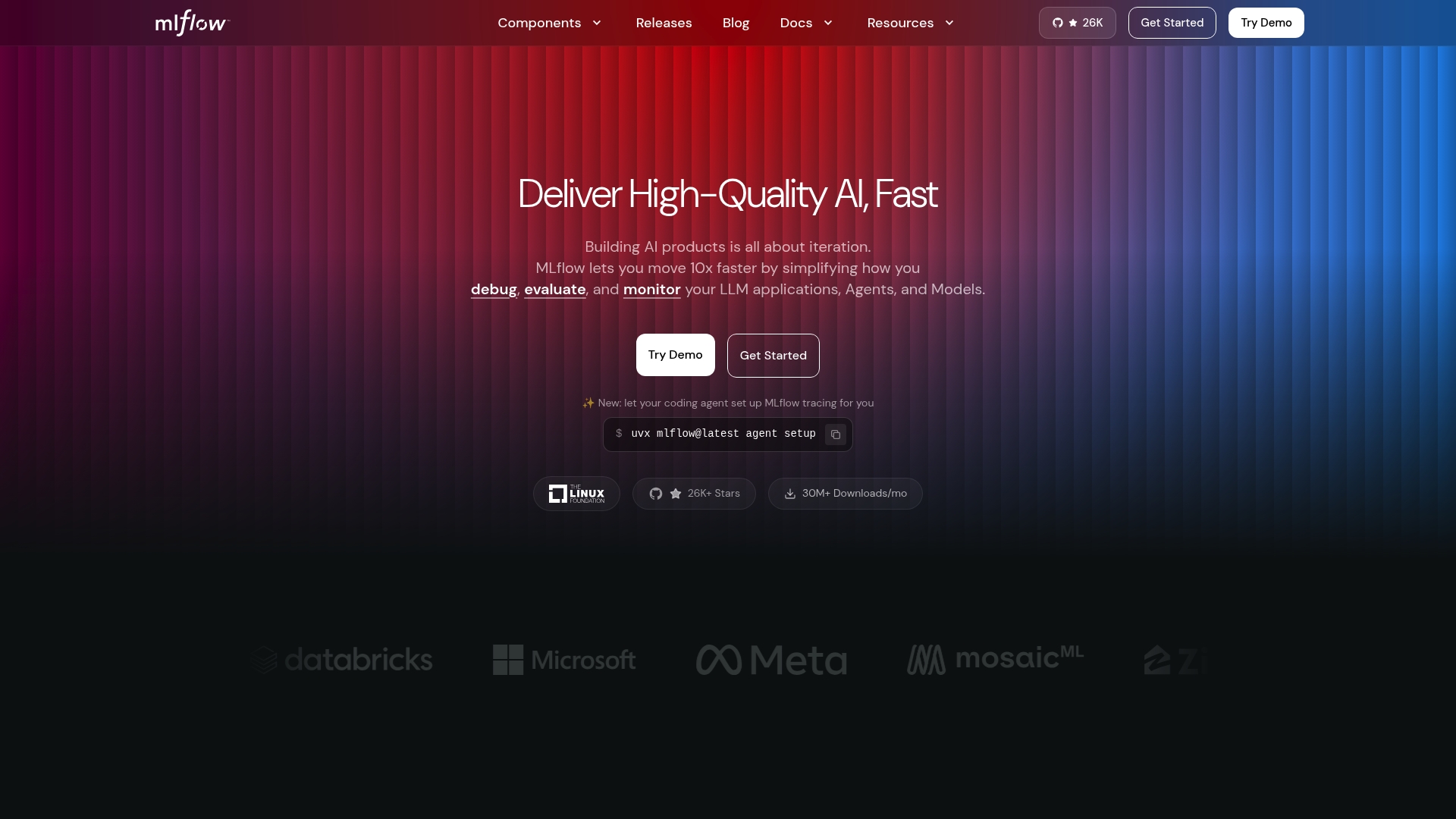
A centralized API gateway for LLM providers and a prompt registry anchor MLflow’s approach to managing agents and prompts. The platform pairs experiment tracking with model registry features branded under MLflow Models. The vendor reports MLflow is trusted by thousands of organizations worldwide.
Core Features
MLflow delivers production-grade observability for AI applications, including deep tracing of agentic reasoning and evaluation metrics for LLMs and agents. The platform combines a prompt registry and a unified API gateway for cross-provider governance while retaining model lifecycle tools such as experiment tracking, MLflow Models, and registry capabilities. These pieces work together to let teams debug, evaluate, monitor, and deploy models across multiple frameworks.
Key Differentiator
Open source and framework neutral design that pairs agent-focused tracing with LLM-aware evaluation workflows. The system collects fine-grained traces of agent decisions and ties those traces back to prompts, model versions, and deployment metadata. That linkage makes root-cause analysis for complex agent failures more practical than toolchains that separate observability from model versioning.
Pros
MLflow is available under the Apache 2.0 license, so teams can run and extend it without license fees. The architecture is framework neutral, so PyTorch, TensorFlow, and HuggingFace models plug into the same observability and registry flows. Integrations include OpenAI and LangChain, which simplify mixing hosted LLM providers with self-hosted models. The platform’s evaluation tooling targets LLM and agent workflows specifically, helping teams validate behavior and monitor production safety and cost.
Cons
- Requires setup and familiarity to wire complex workflows and multiple integrations together.
Notable Integrations
- OpenAI
- LangChain
- PyTorch
- TensorFlow
- HuggingFace
- MLflow integrations for many ML tools
Who It's For
Teams running production ML and LLM applications that need full lifecycle controls, from experiment tracking to deployment and monitoring. Infrastructure engineers who must enforce cross-provider governance will value the centralized API gateway and prompt management. Data scientists and MLOps engineers working with agents or LLM evaluation pipelines will find the tracing and judge-style evaluation features particularly useful.
Unique Value Proposition
Production-grade observability through deep tracing of agentic reasoning connects prompts, model versions, and runtime actions in one trace. That connection reduces time spent hunting down which prompt, model, or provider caused a failure. For organizations operating multi-cloud or multi-provider stacks, this consolidates diagnostics and supports consistent evaluation across providers.
Real World Use Case
A multinational corporation tracks experiments, registers model versions, and monitors deployed LLMs across multiple clouds using MLflow Models and the registry. Traces capture agent decisions and link them to prompts, allowing rapid rollback of a problematic model version. Evaluation pipelines run automated LLM-as-a-Judge tests to catch regressions before wide release.
Website: https://mlflow.org
Tidra
At a Glance
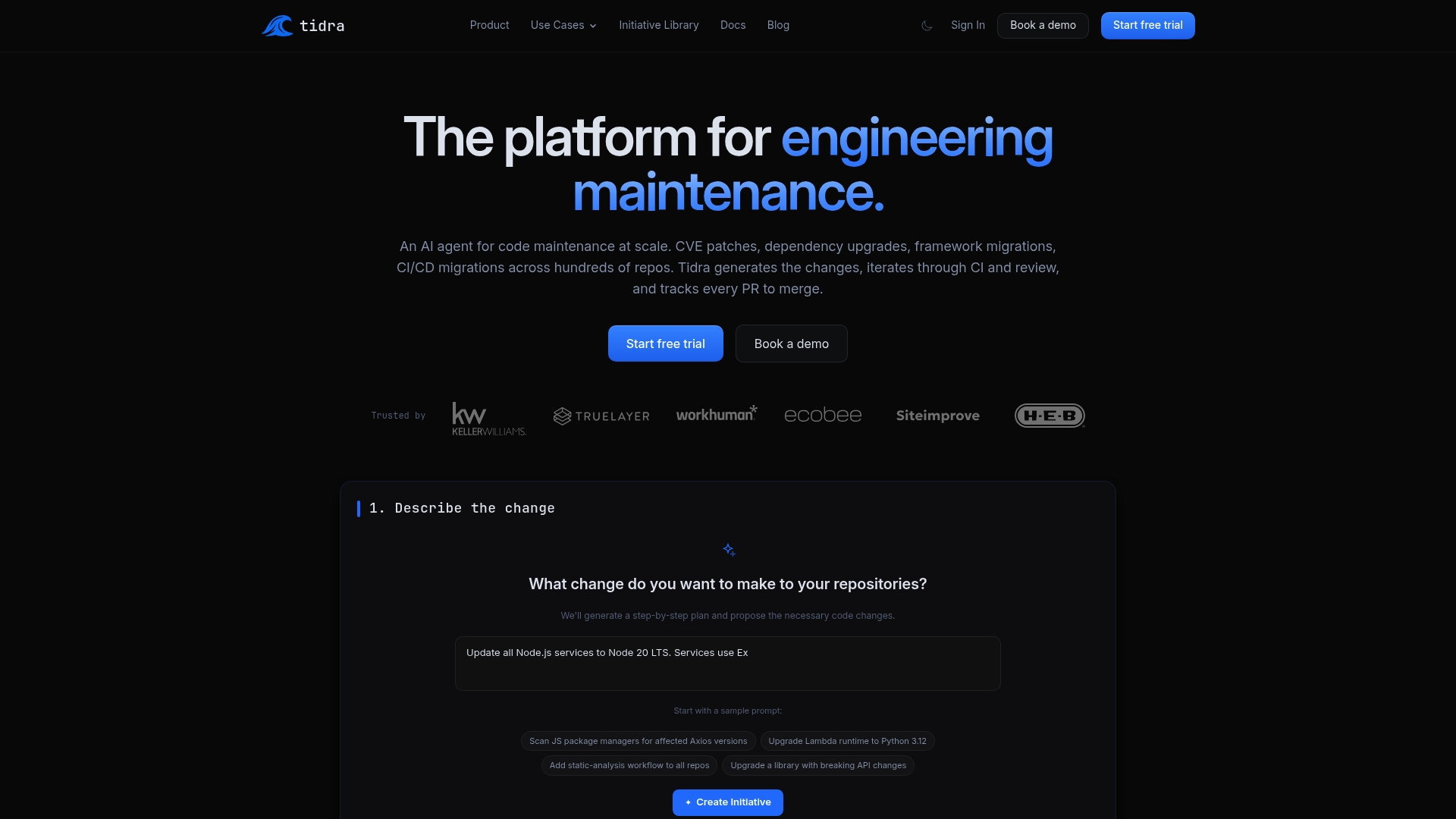
Automatically adapts code changes to each repository's structure, so teams can push coordinated updates across many repositories without hand editing each one. Tidra targets dependency upgrades, CVE patches, framework migrations, and CI/CD configuration updates across an organization. It ties PR activity to a planning view and sends notifications through GitHub, GitLab, Slack, or email.
Core Features
Tidra generates and tracks pull requests across multiple repositories and provides an initiative level planning dashboard that groups related changes. It automates dependency upgrades, CVE mitigation, framework migrations, and configuration standardization while adapting edits to each repository structure. Integrations with GitHub, GitLab, Slack, and email let teams route PRs and notifications into their existing review and coordination channels.
Key Differentiator
The standout is its repository aware analysis that adjusts edits to each codebase layout. That approach reduces the need for manual per repository rules and templates. The analysis inspects file layout, dependency files, and CI scripts before proposing edits. For organizations with many varied repositories, that difference shortens planning and lowers the risk of broken changes.
Pros
Tidra reduces manual toil by generating bulk PRs and handling review and merge coordination. Its dashboard shows initiative progress and collates PRs for single tracking. The tool adapts changes to repo structure and integrates with Git hosting and messaging channels so teams work from familiar interfaces. It adapts to each repository layout which reduces false positives during automated edits.
Cons
- Setup and configuration can be complex for diverse codebases, requiring time and staff attention.
- Non standard repositories often need extensive customization, which can erase early efficiency gains.
- Limited to GitHub and GitLab for version control, so organizations using other hosts will need workarounds.
- Multi language environments may require tuning to reach full effectiveness.
When It May Not Fit
Not the best choice for small teams with only a handful of repositories. Organizations that run custom or uncommon repository layouts may face lengthy configuration. Teams using other version control hosts will need additional integration work.
Who It's For
Platform engineering, DevOps, SRE, and security teams managing hundreds of repositories will get the most value. Teams with established Git practices and a need for coordinated compliance or migrations match this listing. Security teams tracking CVE remediation across many services will also find the tracking useful.
Real World Use Case
The vendor reports a company used Tidra to upgrade Node.js across 200+ microservices, cutting a months long manual effort to a few days. That example shows how centralized planning and bulk PR generation can compress large migrations. The coordinated PRs and tracking gave engineers visibility into each change and merged state. Similar outcomes require initial setup and tuning for non standard repositories.
Website: https://tidra.ai
LlamaIndex
At a Glance
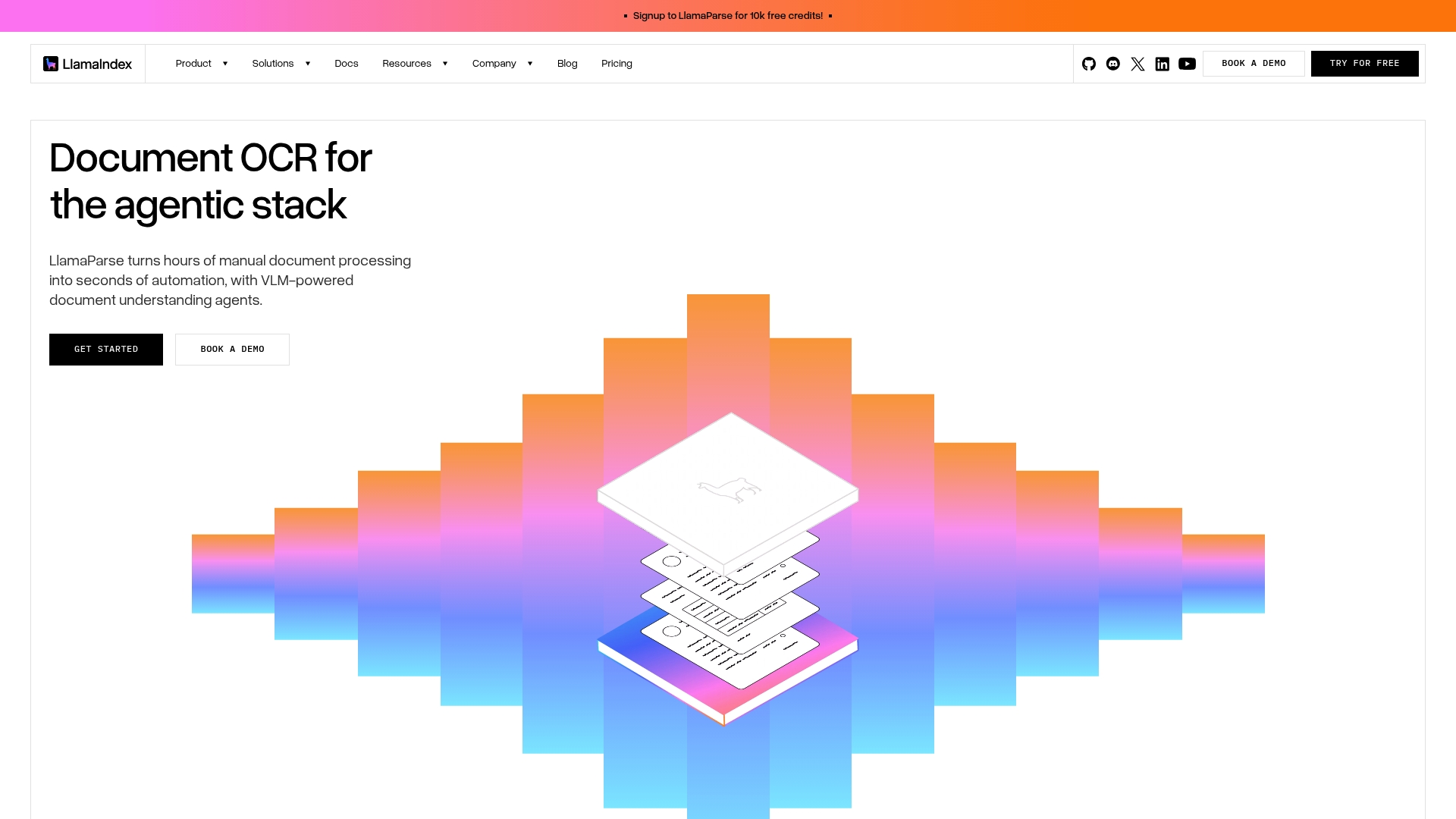
The vendor reports a Boeing subsidiary saved approximately 2,000 engineering hours using LlamaParse, a concrete example of enterprise impact. LlamaIndex targets complex, multi-modal documents and excels where images, handwriting, and dense layouts mix. For teams evaluating index.scala-lang.org alternatives, this product skews toward regulated industries and high-complexity workflows.
Core Features
LlamaIndex performs document parsing across more than 50 file types and extracts schema-driven fields without model training. It offers document segmentation and natural-language classification, plus enterprise-grade indexing, embeddings, and retrieval tuned for RAG applications. The stack includes open source tools such as LiteParse for local parsing with no token limits.
Key Differentiator
LlamaIndex stands out for its focus on parsing accuracy with multi-modal content including handwriting, charts, and tables. The platform couples that parsing accuracy with customizable retrieval pipelines suitable for enterprise search and agentic workflows. Teams that need precise extraction from messy technical files will notice the quality difference quickly.
Pros
High accuracy for complex documents reduces manual cleanup for papers, scans, and mixed-format engineering files. Developer-oriented SDKs and APIs give you fine-grained control over extraction, indexing, and retrieval pipelines. The vendor states compliance with HIPAA, GDPR, and SOC2, which supports regulated deployments and audit requirements. Open source components let you run parsing locally when token limits or data residency matter.
Cons
- Pricing uses a credits-based model. Third-party reviews indicate the structure can feel complex and expensive at high volume.
- Setting up and tuning extraction schemas and pipelines requires engineering time and document expertise.
- The platform may be overkill for teams that only need simple OCR or single-format extraction.
When It May Not Fit
LlamaIndex may not fit small teams with minimal document complexity or limited engineering bandwidth. Projects with light OCR needs will find this approach heavier than necessary. Organizations processing extremely high volumes should model credit usage before committing to a paid plan.
Who It's For
Enterprises and AI developers who need accurate, customizable document understanding in regulated sectors will benefit most. The product suits R&D, legal, finance, and healthcare teams that must extract structured data from dense technical files and maintain compliance. It also fits teams willing to invest in configuration and pipeline tuning.
Real World Use Case
An engineering group used LlamaParse to automate technical document ingestion and reduce manual review. That figure from the vendor illustrates saved labor in R&D workflows. The platform handled drawings, tables, and handwritten notes while feeding results into an internal knowledge base and a retrieval agent.
Pricing
Flexible plans start with a free tier that includes 10,000 credits. Paid tiers increase credit allotments and add dedicated support and enterprise features. Buyers should evaluate projected credit consumption for large-scale document processing before choosing a plan.
Website: https://llamaindex.ai
Comparison of alternatives
MLflow distinguishes itself with its open-source observability and lifecycle tools, tailored specifically for managing agents and large language models (LLMs). However, each alternative provides valuable features that meet different specialized needs.
Observability and LLM-Specific Tools
MLflow excels in providing a framework-neutral, open-source solution for observing LLM behaviors and reasoning traces. The integration of tracing with model lifecycle monitoring creates a diagnostic loop. In contrast, Tidra addresses dependency coordination across repositories and offers planning dashboards for bulk updates. LlamaIndex, with its parsing accuracy for multi-modal documents, suits enterprise scenarios requiring precise extraction across complex technical files.
Adaptation and Customization
Tidra leads in automating pull-request generation and repository-aware analysis, reducing manual toil when compared to repository-independent tools. For organizations handling diverse project structures, its ability to adapt changes to the unique layouts increases efficiency. On the other hand, LlamaIndex’s parsing innovations allow reliable data extraction from hand-drawn diagrams and dense regulatory documents, appealing to sectors heavily regulated like healthcare and finance.
Best fit
- Teams managing LLM applications needing complete lifecycle control will appreciate MLflow’s unified tools for prompt tracking, deployment, and evaluation.
- Large enterprises coordinating dependency updates across hundreds of repositories will find efficiency gains with Tidra’s automated PR generation and layout-specific adaptation.
- Developers working with multi-modal documents requiring regulatory compliance and precise parsing will value LlamaIndex’s schema-based extraction capabilities.
Our pick
MLflow's unique ability to trace model and prompt interactions across diverse provider stacks makes it an essential platform for advanced management of LLM applications. However, organizations with domain-specific needs, such as repository adaptation or document parsing, may consider Tidra or LlamaIndex for their distinct capabilities.
For teams searching for efficient tools to manage agent lifecycle and enhance operational observability, here’s a concise comparison of three products designed for diverse applications:
| Product | Core Feature | Key Differentiator | Best For | Notable Limitation |
|---|---|---|---|---|
| MLflow | Production-grade observability with deep tracing | Framework-neutral with advanced evaluation | Teams utilizing production ML/LLM | Requires setup for complex workflows |
| Tidra | Automated bulk PR generation and initiative planning | Repository-aware analysis for precise changes | Teams managing many repositories | Limited to GitHub/GitLab; non-standard repos need tuning |
| LlamaIndex | Accurate document parsing for multi-modal content | High parsing accuracy for dense/technical docs | Enterprises handling regulated data | May be overly complex for light OCR needs |
How Can Teams Manage Complex LLM Workflows Beyond index.scala-lang.org Alternatives?
Running production AI agents with complex workflows requires full lifecycle control from prompt management to model evaluation and deployment. Mlflow meets this need by providing centralized API gateways, advanced tracing of agent reasoning, and automated LLM-as-a-Judge evaluations. These features help infrastructure engineers and data scientists reduce debugging time and enforce cross-provider governance, addressing challenges common in multi-cloud and multi-provider environments.
Mlflow is an open-source platform trusted worldwide for managing GenAI and LLM applications with deep observability and standardized model lifecycle tools. Learn how Mlflow’s unified approach connects prompts, model versions, and runtime metadata for insightful root-cause analysis across your AI stacks. Visit Mlflow’s homepage to see how teams like yours enable transparent, trackable agent deployment with unified prompt registries and model registries.
FAQ
What capabilities do Mlflow offer for agent lifecycle management?
Mlflow provides detailed observability for AI applications, including deep tracing of agentic reasoning and evaluation metrics. Its combination of a prompt registry and a unified API gateway ensures comprehensive management across various agent lifecycle stages. You can start leveraging Mlflow’s tracking and registry features to enhance your AI workflows.
How does Tidra compare to Mlflow for managing multiple repositories?
Tidra stands out for automating code changes across many repositories, which streamlines efforts like dependency upgrades and security patches. While Tidra is excellent for coordinated updates within diverse codebases, Mlflow is better suited for teams focusing on the full lifecycle of ML and LLM applications. Consider Mlflow if your primary aim involves managing model experimentation and deployment more effectively.
What support does Mlflow offer for various ML frameworks?
Mlflow supports multiple ML frameworks such as PyTorch, TensorFlow, and HuggingFace. This framework neutrality allows teams to work within their preferred environments while utilizing Mlflow’s powerful observability tools. You can integrate your existing ML projects with Mlflow to enhance monitoring and tracking capabilities.
Is using Mlflow cost-effective for small teams?
Using Mlflow can be cost-effective due to its open source nature under the Apache 2.0 license, allowing teams to run and extend the platform without license fees. Small teams can get started without financial commitment, making it an attractive option for those exploring agent lifecycle management without upfront costs.
What type of integrations does Mlflow provide?
Mlflow integrates with popular services like OpenAI and LangChain, enhancing its functionality across different LLM providers. These integrations simplify the connection between hosted models and self-hosted setups, allowing teams to efficiently manage their workflows. Exploring these integrations will help your team build a more cohesive AI application ecosystem.